
Flat Feet (Pes Planus) Treatment — Cockburn Central
Flat feet are one of the most common foot types we assess at Cockburn Podiatry — and one of the most frequently misunderstood. Not all flat feet require treatment, but when flat feet are causing pain in the foot, ankle, knee, or lower back, or when they are affecting your ability to walk, run, or play sport, a podiatry assessment is essential.
At Cockburn Podiatry in Cockburn Central, our podiatrists provide thorough biomechanical assessment and individualised treatment for flat feet in both adults and children, with or without orthotics, depending on what is actually needed.
What Are Flat Feet?
Flat feet — medically termed pes planus — occur when the medial longitudinal arch of the foot is low or absent, causing the entire sole (or most of it) to contact the ground when standing. The arch is a complex structure formed by bones, tendons, and ligaments that acts as a shock absorber and lever for walking and running. When the arch is low, the foot typically overpronates — rolling inward excessively with each step — which can create biomechanical stress throughout the lower limb.
Types of Flat Feet
Not all flat feet are the same, and the distinction matters for treatment:
- Flexible flat feet — the arch appears when the foot is off the ground (sitting or on tiptoe) but flattens under weight-bearing. This is the most common type in both adults and children. Often asymptomatic and may not require treatment.
- Rigid flat feet — the arch remains flat regardless of weight-bearing position. Less common, may be associated with tarsal coalition (fused foot bones) or other structural problems. Requires more thorough investigation.
- Adult-acquired flat foot — a previously normal arch collapses in adulthood, often due to tibialis posterior tendon dysfunction (PTTD) — a progressive condition requiring early intervention.
Symptoms — When Do Flat Feet Cause Problems?
Many people with flat feet have no symptoms at all. Problems arise when the altered biomechanics of flat feet create excess stress elsewhere:
- Foot and arch pain — aching along the inner arch, particularly after prolonged standing or walking
- Heel pain — flat feet are a major risk factor for plantar fasciitis
- Ankle pain — overpronation stresses the ankle ligaments and tendons
- Knee pain — patellofemoral syndrome, knee cap pain, and iliotibial band syndrome
- Hip and lower back pain — biomechanical chain effects
- Leg fatigue and cramping after walking or standing
- Recurrent ankle sprains due to ligament laxity
- Shoe wear abnormalities — excessive wear on the inner heel and forefoot
Flat Feet in Children
A flat arch is completely normal in children under 6 years old. Babies are born with fat pads in the arch position and the arch gradually develops as the foot bones mature. Most children develop a visible arch by age 6–7.
Assessment is recommended if your child has flat feet AND any of the following:
- Pain in the feet, ankles, knees, or legs during or after physical activity
- Flat arch persisting beyond age 6–7
- Significant in-toeing or out-toeing gait
- Avoidance of running, sport, or physical activity
- Asymmetric flat feet (one foot much flatter than the other)
- Frequent tripping or poor coordination
Our podiatrists are experienced in paediatric flat foot assessment and will provide honest, evidence-based advice about whether and what type of intervention is appropriate for your child’s age and presentation. Learn more about children’s podiatry at Cockburn Podiatry →
What Causes Flat Feet?
- Genetics — flat feet commonly run in families
- Hypermobility — lax ligaments allow the arch to collapse under load
- Obesity — excess body weight increases load on the arch structures
- Pregnancy — hormonal changes relax ligaments, often causing temporary arch lowering
- Tibialis posterior tendon dysfunction (PTTD) — degeneration of the main tendon that holds up the arch; causes progressive adult-acquired flat foot
- Arthritis — inflammatory and osteoarthritis can affect the joints that maintain arch height
- Neurological conditions — conditions affecting muscle tone
Flat Feet Treatment at Cockburn Podiatry
Our assessment includes a standing and walking biomechanical assessment, gait analysis, and muscle and joint testing. We determine the type and severity of your flat feet and identify contributing factors before recommending treatment. Not everyone needs orthotics — we prescribe only what is clinically indicated.
Biomechanical Assessment & Gait Analysis
A thorough assessment determines whether your flat feet are causing the problems you are experiencing and what is driving them. We assess joint mobility, muscle strength, and your walking pattern to build a complete picture before prescribing treatment.
Custom Orthotics
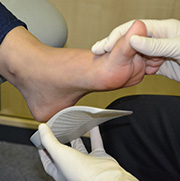 Custom foot orthotics are the most effective tool for controlling the biomechanical consequences of flat feet. They are fabricated from a scan of your foot in a corrected position and are designed to control overpronation, support the arch, and redistribute load across the foot more evenly. Properly prescribed custom orthotics can eliminate pain in the foot, ankle, knee, and lower back caused by flat feet. Health fund rebates are available. Learn more about custom orthotics →
Strengthening & Exercise Program
Strengthening the intrinsic foot muscles and tibialis posterior (the main arch-supporting tendon) improves foot posture and load tolerance. Targeted exercises can reduce overpronation and complement orthotic therapy. In children, exercise programs can actively support arch development. We prescribe progressive programs appropriate to your age, fitness level, and goals.
Footwear Assessment & Advice
Supportive, well-fitting footwear is important for people with flat feet. We assess your current shoes and advise on the appropriate level of arch support and motion control for your foot type. Certain categories of footwear — particularly unsupported thongs, ballet flats, and minimalist shoes — significantly worsen flat foot symptoms and are best avoided or used sparingly.
Children’s Flat Feet Assessment
Our paediatric flat foot assessment includes a detailed gait analysis and muscle testing appropriate for your child’s age. We provide clear guidance on whether intervention is needed and what form it should take — ranging from specific footwear advice through to custom orthotics where clinically warranted. We create a welcoming, child-friendly environment so your child feels comfortable throughout the appointment. Learn more about children’s podiatry →
Tibialis Posterior Tendon Dysfunction (PTTD) Management
PTTD is the main cause of progressive adult-acquired flat foot and requires early, active intervention to prevent further collapse. Treatment includes orthotic support, a structured tendon rehabilitation program, immobilisation in some cases, and referral for imaging and specialist review when surgery is being considered.
Why Choose Cockburn Podiatry for Flat Feet?
- Thorough biomechanical assessment — we prescribe orthotics only when clinically indicated
- Custom orthotics fabricated in-clinic — no referral elsewhere
- Experienced in paediatric flat foot assessment and children’s orthotic prescription
- BUPA and Medibank preferred providers — maximum health fund rebates on orthotics
- Medicare CDM and DVA card holders welcome
- Conveniently located at Cockburn Central, serving South Lake, Yangebup, Atwell, Success, Hammond Park and surrounds
Frequently Asked Questions
Do flat feet always need treatment?
No. Many people with flat feet are asymptomatic and need no treatment. Intervention is recommended when flat feet are causing pain or functional problems in the foot, ankle, knee, hip, or lower back. Our podiatrists assess your specific situation and provide honest advice about whether treatment is actually needed.
Can flat feet be corrected?
In children, the arch often develops naturally and exercises can support this. In adults with rigid structural flat feet, orthotics control the biomechanical effect of flat feet very effectively, though they do not permanently change the bone structure. Strengthening exercises can improve foot posture over time.
My child has flat feet. Do they need orthotics?
Not necessarily. A flat arch is normal in children under 6. Assessment is warranted if the flat feet are causing pain, persist beyond age 6–7, or are accompanied by in-toeing, poor balance, or avoidance of activity. We provide honest, evidence-based advice about what is right for your child specifically.
Can flat feet cause knee, hip, or back pain?
Yes. Overpronation from flat feet creates a chain of compensatory movements that can contribute to knee pain, hip pain, and lower back pain. Correcting foot mechanics with orthotics can provide relief at multiple points in the kinetic chain.
Do I need a referral?
No referral is needed. Simply book online or call (08) 9417 3737. Medicare CDM rebates are available with a GP referral.
Serving south Perth: We treat patients from Atwell, Success, South Lake, Yangebup, Hammond Park, Aubin Grove, Jandakot, Beeliar, Coogee, Baldivis and the wider Cockburn area.
Get an expert assessment of your flat feet or your child’s. Call us on (08) 9417 3737 or book online. No referral needed.
Related services: Custom Orthotics | Children’s Podiatry | Plantar Fasciitis