Podiatry Services at Cockburn Podiatry
At Cockburn Podiatry, our degree-qualified podiatrists provide comprehensive foot and ankle care for patients of all ages across Cockburn Central, South Lake, Yangebup, Atwell, Success, Aubin Grove, Hammond Park, Jandakot, Beeliar, Coogee and Baldivis.
We are BUPA and Medibank preferred providers and accept all major health funds via on-the-spot HICAPS claiming. Medicare CDM referrals and DVA card holders are also welcome. No referral is needed for an appointment — simply book online or call (08) 9417 3737.
Heel & Arch Pain
Heel Pain & Plantar Fasciitis Treatment
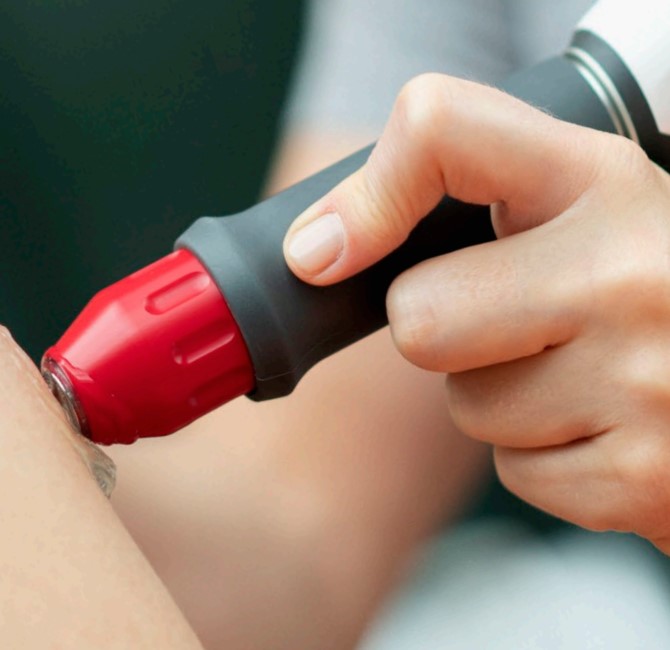
Heel pain is the most common condition treated by our podiatrists at Cockburn Podiatry. Plantar fasciitis — inflammation of the thick band of tissue running along the bottom of your foot — is the leading cause. It produces a sharp, stabbing pain with your first steps in the morning or after rest.
Symptoms include: pain under the heel, arch pain, stiffness after sitting, pain that eases after walking but returns after long periods on your feet.
Our treatments: Shockwave therapy, low-level laser therapy, orthotics, strapping, physical therapy, and footwear advice. We also treat associated conditions including heel spurs and bursitis.
Achilles Tendonitis Treatment
Achilles tendonitis is inflammation of the Achilles tendon — the large tendon connecting your calf muscles to your heel bone. It is common in runners, people who play court sports, and those who have increased their activity levels suddenly. If left untreated, it can progress to an Achilles tendon rupture.
Symptoms include: pain and stiffness along the back of the heel, especially in the morning, swelling, tenderness to touch, and pain during or after exercise.
Our treatments: Load management advice, eccentric heel raise programme, shockwave therapy, orthotics, strapping and bracing, laser therapy, and referral for imaging where required.
Skin & Nail Conditions
Ingrown Toenail Treatment & Surgery
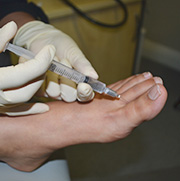
An ingrown toenail (onychocryptosis) occurs when the edge of a toenail grows into the surrounding skin, causing pain, redness, swelling, and infection. It is most common in the big toe but can occur in any nail.
Symptoms include: pain along the edge of the nail, sensitivity to touch, redness, swelling, and in infected cases, discharge and warmth.
Our treatments: Conservative nail edge removal gives immediate relief for early cases. For persistent or recurring ingrown nails, we perform partial nail avulsion (nail surgery) under local anaesthetic in our clinic rooms. A chemical (phenol) can be applied to permanently prevent regrowth of the offending nail edge.
Corns & Calluses Treatment
Corns and calluses are areas of thickened, hardened skin that form in response to repeated pressure or friction on the foot. While a callus is a broader area of hard skin, a corn has a hard central core that presses into the underlying tissue, causing sharper, deeper pain.
Symptoms include: thick, rough skin on the ball of the foot, heel, or between toes; pain when walking; tenderness to direct pressure; and dry, flaky or waxy skin in the affected area.
Our treatments: Our podiatrists debride (remove) the hard skin using specialist scalpels — giving immediate relief. We then identify the underlying cause (pressure, footwear, biomechanics) and address it using padding, orthotics and footwear recommendations. Treating the cause prevents them coming back.
Fungal Nail Infections (Onychomycosis)
A fungal nail infection (onychomycosis) causes toenails to become thickened, discoloured (yellow, brown, or white), brittle, crumbly, or separated from the nail bed. It is caused by dermatophyte fungi and is highly contagious in warm, moist environments such as pools and gym changerooms.
Symptoms include: yellow or white discolouration, thickening or crumbling of the nail, debris under the nail, a faint odour, and in severe cases, pain when wearing shoes.
Our treatments: Depending on severity, we offer topical antifungal solutions, nail debridement to thin the nail and improve treatment penetration, and referral for antifungals where required. Early treatment produces the best outcomes. Health fund rebates apply.
Toenail Discolouration
Discoloured toenails can be caused by several conditions including fungal infection, nail trauma, subungual haematoma (blood under the nail from impact), psoriasis affecting the nails, or underlying vascular conditions. It is important to have discoloured nails assessed by a podiatrist rather than assuming the cause, as treatments differ significantly. Self-treating a traumatic nail as a fungal infection (or vice versa) can delay healing.
When to see us: Any nail that has changed colour, separated from the bed, thickened, or become painful warrants assessment. We diagnose the cause accurately and recommend the most appropriate treatment plan.
Plantar Warts (Verruca) Treatment
Plantar warts (verrucae) are caused by the Human Papillomavirus (HPV) and appear on the soles of the feet as rough, cauliflower-textured growths. They can be painful when walking, particularly when squeezed from the sides, and can multiply and spread if left untreated. They are commonly picked up in public pools, showers, and changing rooms.
Symptoms include: a grainy, rough growth on the sole of the foot; pain when walking or applying direct pressure; small black dots (clotted blood vessels) within the lesion; and in children, multiple warts that spread rapidly.
Our treatments: We offer several treatment options. Treatment is tailored to the size, number, and location of warts as well as patient age and health status. Children and adults are both treated.
Tinea (Athlete's Foot)
Tinea pedis (athlete's foot) is a contagious fungal infection of the skin of the feet, typically starting between the toes. It causes itching, stinging, burning, and scaling. It thrives in warm, moist environments and is common among athletes, swimmers, and anyone who walks barefoot in communal areas. In people with diabetes, tinea can break down the skin and increase the risk of more serious infections.
Symptoms include: itching and burning between the toes, scaly or peeling skin, blisters, dry skin on the soles or sides of the foot, and in severe cases, bacterial superinfection.
Our treatments: Topical antifungal therapy, advice on footwear and sock hygiene, treatment of secondary nail involvement, and preventive strategies. Chronic or recurrent tinea is assessed for contributing factors such as sweating, footwear choice, and immune status.
Cracked Heels
Cracked heels (heel fissures) occur when dry, thickened skin on the heel splits under pressure. Mild cases cause cosmetic concern, but deep cracks can be painful, bleed, and become infected — particularly dangerous for diabetic patients. Common contributing factors include dry skin, prolonged standing, obesity, open-backed footwear, and conditions such as diabetes, hypothyroidism, and psoriasis.
Our treatments: Debridement of thick callus, high-strength urea creams, padding, and where required, custom orthotics to redistribute heel pressure. Diabetic patients receive a comprehensive check as part of the treatment.
Biomechanical & Structural Conditions
Orthotics
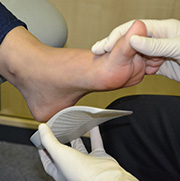
Orthotics are prescription insoles made specifically for your feet. They are fabricated from a scan of your foot following a thorough biomechanical assessment, and are designed to correct abnormal foot mechanics, redistribute pressure, and reduce pain. Custom orthotics, unlike over-the-counter insoles, are made to your exact measurements and clinical needs.
At Cockburn Podiatry, we prescribe orthotics for a wide range of conditions including plantar fasciitis, Achilles tendonitis, flat feet, high arches, Morton's neuroma, bunions, shin splints, and knee pain. Health fund rebates are available.
Flat Feet (Pes Planus) & High Arches
Flat feet occur when the arch of the foot collapses, causing the sole to contact the ground fully when standing. While some people with flat feet have no symptoms, others experience foot, ankle, knee, hip, or lower back pain due to the altered biomechanics. High arches (pes cavus) create excessive pressure on the heel and ball of the foot, often causing pain, calluses, and instability.
Our treatments: Biomechanical assessment, gait analysis, strengthening exercises, footwear advice, and orthotics to support and correct foot posture. Children with flat feet are assessed carefully to determine whether intervention is required or whether natural correction will occur with growth.
Bunions (Hallux Valgus)
A bunion (hallux valgus) is a bony deformity of the big toe joint where the big toe angles toward the second toe, creating a prominent bony bump on the side of the foot. Bunions are often hereditary but can be worsened by footwear, biomechanics, and joint disease.
Symptoms include: a visible bony bump at the base of the big toe, pain and swelling at the joint, redness, restricted movement of the big toe, and calluses where the toes overlap.
Our treatments: Podiatry cannot reverse a bunion without surgery, but we provide effective conservative management to slow progression and relieve pain: padding and deflection devices, toe spacers, custom orthotics to offload the joint, footwear advice, and referral to a podiatric surgeon when surgical correction is appropriate.
Hammertoes & Claw Toes
A hammertoe is a deformity in which a toe bends abnormally at the middle joint, curling downward like a hammer. Claw toes are similar but involve curling at both the middle and end joints. These conditions cause pain, corns on the tops of the bent joints, difficulty fitting into shoes, and in severe cases, difficulty walking.
Our treatments: Padding and deflection to relieve pressure on the affected joints, footwear advice, and orthotics to address the underlying biomechanical cause. Early treatment can slow or stop progression.
Morton's Neuroma
A Morton's neuroma is a thickening of the nerve tissue between the metatarsal bones in the ball of the foot, most commonly between the third and fourth toes. It is caused by repeated compression and irritation of the nerve, and is more common in women who wear narrow or high-heeled shoes and in runners.
Symptoms include: a sharp, burning, or shooting pain in the ball of the foot; tingling or numbness that radiates into the toes; a sensation of standing on a pebble or a bunched-up sock; and pain that worsens with narrow shoes or prolonged standing.
Our treatments: Metatarsal padding and domes to reduce nerve compression, wide-fitting footwear advice, orthotics to offload the forefoot, activity modification, and where required, referral for ultrasound-guided injection or specialist review.
Sports Podiatry & Lower Limb Conditions
Sports Podiatry
Our sports podiatrists at Cockburn Podiatry assess and treat a wide range of sports-related foot and lower limb injuries. We work with recreational athletes, school-aged sports participants, and competitive sportspeople across all disciplines — running, football, netball, basketball, cricket, cycling, and more.
Our sports podiatry services include: biomechanical and gait analysis, return-to-sport planning, sports-specific orthotic prescription, taping and strapping, shockwave therapy, laser therapy, footwear assessment, and injury prevention programs.
Shin Splints (Medial Tibial Stress Syndrome)
Shin splints — medial tibial stress syndrome — cause pain along the inner edge of the shin bone. They are very common in runners, military recruits, and athletes who have recently increased their training load. If left untreated, they can progress to a stress fracture.
Symptoms include: a dull, aching pain along the shin during or after running; tenderness along the inner shin bone; mild swelling; and pain that typically improves with rest but returns with activity.
Our treatments: Load management and training modification, stretching and strengthening program, running gait analysis, footwear assessment, and custom orthotics where biomechanical factors are contributing.
Foot & Ankle Injuries
Foot and ankle injuries are among the most common sports and everyday injuries we treat. These include ankle sprains (ligament injuries from rolling the ankle), stress fractures (small cracks in bone from repetitive loading), peroneal tendon injuries, plantar plate tears, and acute trauma such as bruising, lacerations, and fractures.
Our treatments: Accurate diagnosis (we can refer for X-ray, ultrasound, or MRI where needed), offloading, strapping and bracing, rehabilitation exercises, orthotic support, shockwave therapy, and return-to-activity planning.
Arthritis of the Foot & Ankle
Arthritis — including osteoarthritis, rheumatoid arthritis, and gout — commonly affects the joints of the foot and ankle. Arthritis causes joint pain, stiffness, swelling, and reduced range of motion, making walking and everyday activities difficult.
Our treatments: Footwear assessment and advice, joint offloading strategies, custom orthotics to reduce joint stress, padding and deflection, exercise recommendations, and co-management with your GP or rheumatologist. For gout, we provide dietary and lifestyle guidance alongside treatment of acute flare-ups.
Specialist Podiatry Services
Diabetic Foot Assessment & Care
Diabetes significantly affects the health of your feet. High blood sugar levels can damage the nerves (peripheral neuropathy) and blood vessels (peripheral vascular disease) in your feet, reducing sensation, circulation, and the ability to heal wounds.
Diabetes Australia recommends that all people with diabetes see a podiatrist for a comprehensive diabetes foot assessment every 6–12 months, or every 3 months for high-risk patients. Early detection of circulation or sensation changes can prevent serious complications including ulceration and amputation.
Our diabetic foot assessment includes:
- Neurological assessment
- Vascular assessment
- Skin and nail inspection
- Footwear assessment and advice
- Risk stratification and education on foot care
- Wound care and referral where required
Medicare CDM referrals are accepted. DVA card holders are welcome. Book a diabetic foot assessment →
Children's Podiatry (Paediatric)
Our podiatrists have extensive experience in paediatric podiatry — assessing and treating foot and lower limb conditions in children from toddlers through to teenagers. Children's feet grow and change rapidly, making early assessment important for long-term foot health.
Common conditions we treat in children include:
- Flat feet (paediatric pes planus) — assessment of when natural correction is expected and when intervention is required
- In-toeing and out-toeing — pigeon toes and walking gait concerns
- Sever's disease — heel pain in children during growth spurts
- Growing pains in the feet and legs
- Ingrown toenails in children
- Plantar warts — common in school-aged children
- Toe walking assessment
Health fund rebates apply. Our team creates a welcoming, child-friendly environment. Book a children's podiatry appointment →
Laser Therapy (LLLT)
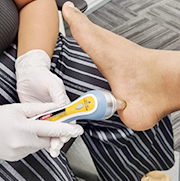
Low Level Laser Therapy (LLLT) is a non-invasive treatment that uses specific wavelengths of light to stimulate healing at a cellular level. It reduces pain and inflammation, enhances blood flow, and promotes tissue repair and regeneration — without any pain, heat, or side effects.
Conditions treated with laser therapy: Plantar fasciitis, Achilles tendonitis, neuroma pain, post-surgical recovery, arthritis, and chronic soft tissue injuries.
Shockwave Therapy
Shockwave Therapy is a clinically proven, non-invasive treatment that uses high-energy acoustic waves to stimulate healing in chronically injured tissues. It is particularly effective for conditions that have not responded to other treatments.
Conditions treated with shockwave therapy: Chronic plantar fasciitis (heel pain), Achilles tendonitis, shin splints, calcific tendonitis, and other chronic soft tissue conditions.
Medical Pedicures
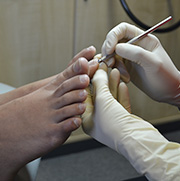
A Medical Pedicure at Cockburn Podiatry is a complete foot care treatment performed by our degree-qualified podiatrists in a fully sterile, dry environment.
Your medical pedicure includes: debridement of corns and calluses, nail trimming and filing, cuticle treatment, assessment and treatment of ingrown toenails and fungal infections where possible, and application of therapeutic skincare products with antifungal and antibacterial properties.
Your overall foot health is checked at every appointment. Health fund rebates are available and claimed on the spot. Book a medical pedicure →
General Foot Care & Nail Maintenance
Routine podiatry care is essential for maintaining healthy feet, particularly for elderly patients, those with diabetes, and anyone with reduced mobility who finds it difficult to care for their own nails and skin. Our general podiatry services include nail trimming and care, hard skin removal, moisture therapy, and comprehensive foot assessments.
We are a DVA provider and accept Medicare CDM referrals for general foot care — please contact us to discuss your needs. Book a general foot care appointment →
Health Fund Rebates & Medicare
We accept all major health funds via on-the-spot HICAPS claiming, including HBF, Medibank Private, BUPA, NIB, HCF, GMHBA and many more. We are proud BUPA and Medibank preferred providers. Medicare rebates are available for eligible patients with a Chronic Disease Management (CDM) plan from their GP. DVA card holders are also welcome. Please bring your health fund card to every appointment.
Ready to Book?
Call us on (08) 9417 3737 or book online. No referral needed. New patients always welcome. Serving Cockburn Central, South Lake, Yangebup, Atwell, Success, Aubin Grove, Hammond Park, Jandakot, Beeliar, Coogee and Baldivis.